
Types of ships-Tankers to Carriers
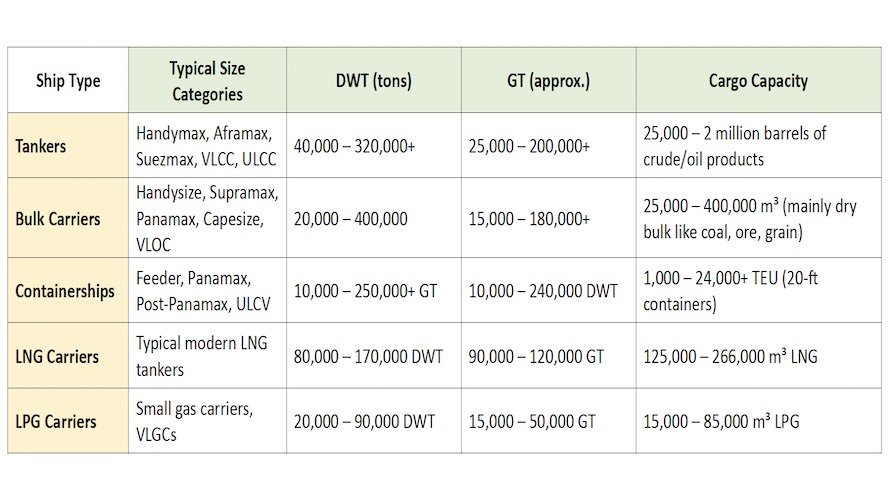
Provided table is overview of typical size and tonnage for major commercial cargo ship types, categorized by deadweight tonnage (DWT), gross tonnage (GT), and cargo capacity (where relevant):
- DWT: Deadweight tonnage — max weight a ship can safely carry (cargo, fuel, crew, etc.).
- GT: Gross tonnage — a volumetric measure of internal ship space.
- TEU: Twenty-foot Equivalent Unit — standard measure for container capacity.
- VLCC/ULCC: Very Large/Ultra Large Crude Carriers.
- VLOC: Very Large Ore Carrier.
- ULCV: Ultra Large Container Vessel.
Backbone of Global Trade: Commercial Cargo Shipping
Are you looking to invest in an industry that moves 90% of the world’s trade? The global commercial shipping sector is a cornerstone of the international economy—and an unmatched opportunity for long-term, asset-backed investment.
At the heart of this dynamic industry are specialized cargo vessels—each engineered for maximum efficiency and profitability. Here’s a quick look at the types of vessels driving the maritime economy and offering diverse investment potential:
Tankers: Fueling the World
Tankers transport the world’s most valuable commodities—crude oil and refined products. With size classes ranging from Handymax to ULCC (Ultra Large Crude Carrier), these giants can carry from 25,000 to 2 million barrels. With DWTs exceeding 320,000 tons, tankers represent a mature, high-demand segment with consistent global traffic and strong charter returns.
Bulk Carriers: Feeding and Powering the Planet
Bulk carriers move essential raw materials—coal, iron ore, grain. Categorized into Handysize, Panamax, Capesize, and VLOCs, these vessels offer flexible investment entry points. They haul 25,000 to 400,000 m³ of dry goods, with vessels up to 400,000 DWT and 180,000+ GT—ideal for long-term contracts with mining and agriculture sectors.
Containerships: The Engine of E-Commerce
From smartphones to shoes, containerships transport the products of modern life. Vessels range from regional feeders to Ultra Large Container Vessels (ULCVs) carrying over 24,000 TEUs. With GTs exceeding 250,000, these ships offer high-yield potential tied directly to global trade volumes and e-commerce growth.
LNG Carriers: Powering the Future
The demand for clean energy is surging—and LNG (Liquefied Natural Gas) carriers are at the forefront. Modern LNG ships hold 125,000 to 266,000 m³ and range from 80,000 to 170,000 DWT. As global LNG trade expands, so does the return on LNG shipping investments, supported by long-term contracts and government energy policies.
LPG Carriers: Gas on the Move
LPG (Liquefied Petroleum Gas) carriers transport propane, butane, and other by-products crucial to industrial and residential use. With capacities up to 85,000 m³ and GTs around 50,000, these vessels support strong demand in emerging markets and developing economies.
Why Invest in Shipping?
- Tangible Assets: Ships are real, insurable, high-value assets.
- Global Demand: Backed by consistent demand for goods, energy, and resources.
- Diverse Risk Profiles: Options from short-term spot markets to long-term fixed contracts.
- ESG Transition Opportunities: LNG and future green fuels (like ammonia) present sustainable growth pathways.
Set Sail on a Proven Investment Path
Whether you’re an institutional investor or a private fund seeking stable, asset-backed opportunities, commercial shipping offers resilience, growth, and global relevance. Invest in the ships that move the world—and let your capital ride the waves of global trade.
Contact us today to learn how you can join the fleet of forward-looking investors.
Related Posts